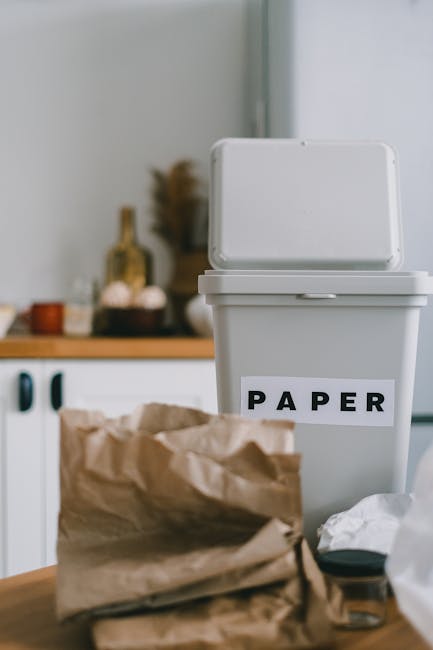
Quick Guide to Separating Recyclables from Mixed Rubbish
If your bin area is a jumble of bottles, takeaway packaging, food scraps, old cardboard, and the odd thing you're not quite sure about, you're not alone. Separating recyclables from mixed rubbish can feel fiddly at first, but a simple system makes it far easier than most people expect. This quick guide to separating recyclables from mixed rubbish shows you how to sort everyday items properly, avoid common contamination mistakes, and keep waste moving into the right stream with less effort.
Whether you're clearing out a flat, dealing with a weekly household routine, or managing waste for a business, the same basic principle applies: keep recyclable materials clean and separate where possible, and treat genuinely unrecyclable waste as residual rubbish. Do that well, and you improve recycling outcomes, reduce unnecessary disposal, and make collection day much less chaotic.
Expert summary: the best sorting system is not the most complicated one. It is the one you can stick to every week without having to think too hard.
Table of Contents
- Why Quick Guide to Separating Recyclables from Mixed Rubbish Matters
- How Quick Guide to Separating Recyclables from Mixed Rubbish Works
- Key Benefits and Practical Advantages
- Who This Is For and When It Makes Sense
- Step-by-Step Guidance
- Expert Tips for Better Results
- Common Mistakes to Avoid
- Tools, Resources and Recommendations
- Law, Compliance, Standards, or Best Practice
- Options, Methods, or Comparison Table
- Case Study or Real-World Example
- Practical Checklist
- Conclusion
- Frequently Asked Questions
Why Quick Guide to Separating Recyclables from Mixed Rubbish Matters
Recycling only works properly when the right materials end up in the right place. Mixed rubbish is called that for a reason: it can contain a blend of recyclable items, food waste, contaminated packaging, non-recyclable plastics, and general waste. If everything goes into one bin without any sort of pre-check, recyclable items are more likely to get dirty, broken, or rejected.
That matters for a few practical reasons. First, clean material is easier to recycle. A cardboard box soaked in gravy or a plastic tub full of leftover sauce is far less useful than the same item rinsed and emptied. Second, sorting properly helps reduce the amount of waste heading to landfill or treatment. Third, it can save time later, because a tidy separation routine avoids last-minute bin reshuffling when collection day arrives and the lids won't quite shut. We have all seen that bin, sitting there like it has already made up its mind.
There is also a broader environmental angle. Good separation supports the recycling chain from household or workplace to sorting facility and onward to reprocessing. If enough people put the right things in the right stream, recyclers can recover more material with less effort.
If your waste pattern is more complex than a standard household bin, it can help to look at a wider waste service such as recycling and sustainability alongside practical collection options like waste collection or rubbish removal. That way, your sorting habits match the way your waste is actually handled.
How Quick Guide to Separating Recyclables from Mixed Rubbish Works
The process is simple in concept, though a little more detailed in practice. You identify recyclable materials, separate them from residual waste, and keep anything contaminated or unsuitable out of the recycling stream. The exact accepted materials depend on your local collection rules or waste contractor, but the logic stays the same.
Most separation systems break down into three buckets of thought, even if you only use two actual bins:
- Recyclables: clean paper, cardboard, cans, many plastic bottles and containers, and glass where accepted.
- Residual waste: non-recyclable packaging, heavily soiled items, broken mixed-material products, and waste that cannot be recovered safely or economically.
- Special items: electricals, batteries, bulbs, fridges, mattresses, and bulky household items that need a separate route.
What trips people up is not the theory. It is the mixed material item that looks recyclable but isn't straightforward. A foil-lined crisp packet, for example, is not the same as a clean aluminium can. A greasy pizza box can be partly recyclable in some situations, but the contaminated base usually needs to go elsewhere. That is why a quick visual check often helps more than guesswork.
In a household setting, the workflow might be: empty food, flatten cardboard, rinse containers lightly if needed, and put questionable items aside until you can verify them. In an office or business setting, the same steps apply, just at scale. For larger volumes, services such as business waste removal or office clearance can support better segregation from the start.
Key Benefits and Practical Advantages
Sorting recyclables from mixed rubbish brings benefits that are easy to underestimate until you actually try doing it consistently.
- Less contamination: clean recyclables are more likely to be accepted and processed.
- Smarter use of space: flattening and separating materials reduces bulk.
- Faster collection prep: fewer last-minute checks and less bin overflow.
- Better cost control: the right waste route can reduce unnecessary disposal charges in some scenarios.
- Stronger sustainability habits: consistent sorting makes recycling part of the routine rather than an afterthought.
- Fewer disputes about what goes where: especially useful in shared homes, flats, and offices.
There is also a less obvious benefit: once people understand what belongs in each stream, they waste less time debating individual items. That reduces the sort of decision fatigue that causes people to throw everything into the general bin just to be done with it.
For larger clean-outs, separating material in advance can also make services like house clearance, home clearance, or flat clearance more efficient because recyclable items are easier to identify and divert.
Who This Is For and When It Makes Sense
This approach is useful for almost anyone, but it is especially valuable in a few situations.
Households: If your kitchen waste, packaging, and general rubbish all end up in one place during the week, a simple sorting routine can prevent bin overload and reduce mess.
Flat sharers and HMOs: Shared spaces often create the most confusion. One person rinses tins, another doesn't. One person folds cardboard, another stuffs it loosely into the bin. A clear method solves a lot of silent frustration.
Landlords and managing agents: For properties that turn over frequently, a visible sorting setup can reduce contamination and help tenants understand expectations quickly.
Offices and shops: Mixed waste in commercial settings is often a sign that bins are badly placed or labels are too vague. Better separation can improve workflow and waste handling.
Renovations and clear-outs: During home improvement projects, you may generate cardboard, timber, packaging, plasterboard, and residual rubbish all at once. That is where services like builders waste clearance and bulk waste collection can be particularly useful.
If you are dealing with old sofas, mattresses, or appliances, it is usually better to separate them from ordinary rubbish and book the right route. Pages such as sofa removal, mattress disposal, and white goods recycle are relevant examples of how item-specific sorting improves outcomes.
Step-by-Step Guidance
Here is the simplest practical process for separating recyclables from mixed rubbish.
- Start with the item, not the bin. Pick up each object and ask: can this be recycled, or is it contaminated, composite, or special waste?
- Empty and lightly clean when appropriate. Containers do not need to be sparkling. They just need to be free from obvious food residue.
- Flatten cardboard and remove loose inserts. Flattened boxes save room and help prevent half-open piles from sliding around.
- Keep dry paper separate from soiled paper. Pizza boxes, greasy napkins, and food-stained paper often belong in residual waste.
- Separate bottles, cans, and clean rigid plastics. These are the most commonly recyclable household materials, subject to local collection rules.
- Put uncertain items in a "check later" pile. This is far better than guessing and contaminating a whole batch.
- Reserve one container for residual rubbish. This keeps non-recyclables from creeping into the recycling bin just because it was closest.
- Deal with bulky or specialist items separately. Electronics, furniture, fridges, beds, and garden waste often need dedicated collection routes.
A useful real-world habit is to sort as you unpack shopping or finish cooking, rather than waiting until the bin is overflowing. Five seconds now is cheaper than five minutes later with sticky packaging. That slight change in timing makes a big difference.
If you have a one-off load of mixed household items, a broader service such as rubbish clearance or waste removal may be the more practical option, especially where space is tight.
Expert Tips for Better Results
Once the basics are in place, a few small adjustments can improve your sorting accuracy.
1. Use visual cues, not memory. Labels, coloured bags, and clearly marked containers reduce mistakes dramatically. The human brain is excellent at making confident guesses and occasionally spectacular errors.
2. Keep a "questionable items" tray. If something seems recyclable but you are not sure, do not force the decision on the spot. Park it, check the guidance, and then move it.
3. Think in terms of material, not product. The same item type can behave differently depending on what it is made of. A plastic tray, foil carton, and paper sleeve are not all treated the same.
4. Don't chase perfection at the expense of consistency. A simple routine that gets 90% of items right is usually better than a complex one nobody follows.
5. Reduce the amount of mixed rubbish you create in the first place. Buying less over-packaged material, reusing bags, and choosing refillable options all make separation easier later.
6. Review your local rules periodically. Collection requirements can change, and shared buildings may have their own internal system. A quick check once in a while avoids old habits becoming expensive habits.
For households with lots of furniture or room-to-room clutter, services like furniture collection and loft clearance can reduce the volume of material you need to sort manually.
Common Mistakes to Avoid
Most sorting mistakes are understandable. They usually come from rushing, uncertainty, or the assumption that "it looks recyclable, so it probably is." That assumption causes a lot of contamination.
- Putting food-stained packaging into recycling: residue is one of the biggest causes of rejection.
- Mixing recyclables with general rubbish at the last minute: this defeats the point of separating them early.
- Including flexible plastics without checking acceptance: many films and wraps do not follow the same route as bottles.
- Forgetting hidden non-recyclable parts: lids, liners, pumps, and mixed components can change the whole item.
- Ignoring special items: batteries and electricals should not be left in standard waste.
- Overfilling bins: if a bin is too full to close, items are more likely to blow away, fall out, or be missed at collection.
- Not separating bulky items in advance: large items often need a different collection or disposal route.
One mistake that catches people out frequently is assuming that all plastics are equal. They are not. Recycling systems often prioritise specific shapes and materials, especially clean bottles and rigid containers. If in doubt, treat the item cautiously and verify it before adding it to your recycling container.
For awkward household items, you may find it easier to book a dedicated service such as fridge disposal or mattress collection rather than trying to squeeze everything into the wrong bin stream.
Tools, Resources and Recommendations
You do not need fancy kit to separate recyclables well, but a few practical tools make life easier.
- Two or three clearly labelled containers: one for recycling, one for residual waste, and one for uncertain items.
- Reusable caddy or tub: useful for kitchen recyclables so you are not walking to the main bin every two minutes.
- Simple bin labels: pictures help more than text alone in shared homes or offices.
- Stacking or nesting crates: good for smaller properties and back-of-house commercial spaces.
- Bag holders or liners: helpful if you need to keep different waste streams separated before collection.
- Local council guidance: always worth checking for accepted materials, especially for plastics and food packaging.
For people who want a more streamlined waste setup, it can also help to review contractor information such as pricing and quotes before deciding whether to manage everything yourself or hand larger volumes over to a service provider. If you are concerned about service trust and handling standards, the pages on health and safety and insurance and safety are useful supporting reads.
When the question is less about recycling strategy and more about getting rid of a lot of stuff quickly, a purpose-built collection can be the cleaner answer. That includes bulky waste collection, waste disposal, and home clearance.
Law, Compliance, Standards, or Best Practice
In the UK, waste handling is shaped by local authority rules, commercial waste duties, and general environmental best practice. The exact requirements depend on the type of property, the waste stream, and whether you are dealing with household or business waste. Because those details vary, it is sensible to check current local guidance rather than rely on memory or advice that worked in another borough.
For households, the practical expectation is usually straightforward: follow your council's collection rules, keep recyclables reasonably clean, and do not place prohibited items in the wrong bin. For businesses, the bar can be higher. Companies are generally expected to manage waste responsibly, separate suitable recyclable material where relevant, and use authorised collection routes.
Where specialist waste is involved, safety and handling standards matter too. Electricals, fridges, mattresses, and some building materials may need dedicated processing. In these cases, convenience should never override safe handling or proper disposal routes.
If you are choosing a private contractor, it is worth checking their public information pages so you understand how they handle service standards and customer care. Useful examples include about us, terms and conditions, privacy policy, and contact us.
Best practice, in plain English, means this: keep recyclable materials clean, separate special items properly, and make sure anything you hand over goes to a legitimate route for further treatment.
Options, Methods, or Comparison Table
There is more than one way to manage mixed rubbish and recyclables. The best method depends on how much waste you generate, how much space you have, and how often you want to deal with it.
| Method | Best for | Pros | Watch-outs |
|---|---|---|---|
| Simple two-bin system | Most homes and small flats | Easy to follow, low cost, fast to maintain | Needs clear rules for questionable items |
| Three-stream sorting | Shared homes, offices, frequent cooks | Reduces contamination and improves clarity | Takes more space and clearer labelling |
| Pre-sorting into specialist items | Clear-outs, renovations, business premises | Makes collection and disposal more efficient | Requires more initial organisation |
| One-off professional collection | Bulky loads or mixed household waste | Saves time, handles awkward items, simplifies logistics | Less hands-on control if you want to sort every item yourself |
For a lot of readers, the two-bin system is enough. But once a household has frequent deliveries, takeaways, or a lot of packaging, a third container for "check later" items can be a surprisingly useful compromise. It keeps recycling honest without slowing down the routine.
In situations where the waste load is large or awkward, services such as bulk waste collection or waste clearance are often more practical than trying to improvise with standard bins.
Case Study or Real-World Example
Consider a typical two-bedroom flat after a weekend of cleaning out cupboards. You have delivery boxes, a few cans, food packaging, old magazines, broken bits of storage, and one table lamp that stopped working months ago and has been quietly living under a chair. Before sorting, it all looks like "rubbish." After sorting, it becomes much clearer.
The cardboard boxes are flattened and kept dry. Clean cans and rigid containers go into recycling. Food-soiled wrappers and contaminated paper go into residual waste. The lamp is separated as a special item instead of being thrown into general rubbish. Suddenly the whole load is smaller, cleaner, and easier to deal with.
That same principle works for a family house too, just with more volume. In one practical example, separating items before arranging house clearance or furniture disposal makes the process quicker because the recyclable and reusable material is easier to identify on the spot.
The real lesson is simple: sorting earlier prevents the usual end-of-week pile-up where everyone stares at the same box and asks, "Can this go in recycling?"
Practical Checklist
Use this checklist before you put waste out for collection.
- Are recyclables empty and free from obvious food residue?
- Have cardboard boxes been flattened?
- Have paper items stayed dry and clean?
- Are bottles, cans, and rigid plastics separated from residual waste?
- Have you checked any tricky items against local guidance?
- Have batteries, bulbs, and electricals been kept out of standard rubbish?
- Have bulky items been set aside for a dedicated collection route?
- Is the residual waste bin reserved for items that really cannot be recycled?
- Can all containers close properly without overflowing?
- Have shared users of the bin system been given clear instructions?
If you can tick most of those off, your waste system is in good shape. If not, there is usually one small change that fixes most of the problem: better labels, a separate caddy, or a more realistic setup for the kind of waste you actually produce.
Conclusion
Separating recyclables from mixed rubbish does not need to be complicated. The trick is to keep it simple, stay consistent, and sort with the material in mind rather than the bin you happen to be standing next to. Clean recyclables, sensible separation, and a clear place for residual waste are the foundation of a better waste routine.
For households, that means less bin stress and fewer mistakes. For businesses, it means cleaner operations and a more reliable disposal process. And for anyone dealing with bulky, awkward, or one-off waste, it often makes sense to use a service that matches the waste type instead of forcing everything into one catch-all solution.
If you want to improve your sorting routine or deal with a larger waste load the straightforward way, explore the relevant service pages and get a tailored quote for your situation.
Get a free quote today and see how much you can save.
Frequently Asked Questions
What is the easiest way to separate recyclables from mixed rubbish?
The easiest method is to use a simple two- or three-stream setup: clean recyclables, residual waste, and a small space for uncertain items you need to check later. Keep it consistent and label everything clearly.
Do recyclable items need to be washed before I recycle them?
They usually do not need a full wash, but they should be empty and reasonably free from food residue. A quick rinse or scrape is often enough.
Can greasy pizza boxes be recycled?
Sometimes the clean parts can be recycled, but heavily soiled sections usually cannot. If the box is badly contaminated, it is safer to put it in residual waste.
Are all plastics recyclable?
No. Many people assume they are, but recycling often depends on the type and shape of plastic. Bottles and rigid containers are commonly accepted more often than flexible films or composite packaging.
What should I do with items I am not sure about?
Put them aside in a separate "check later" container. It is better to verify an item than to contaminate a whole batch of recyclables.
How do I separate waste in a small flat with little storage space?
Use stackable containers, slim bins, or one caddy for kitchen recyclables and one bin for residual waste. A compact system is better than no system at all.
What is the difference between mixed rubbish and general waste?
In everyday use, they are often used to mean the same thing: the residual rubbish that cannot go into recycling. The exact label may vary by council or contractor.
Do businesses need a different approach from households?
Yes, usually. Business waste can involve larger volumes, more frequent collections, and clearer responsibility for separating recyclable material. A commercial setup often needs stronger labels and better bin placement.
What should I do with broken furniture or bulky items?
Keep them separate from ordinary rubbish and use a dedicated route such as bulky waste collection, furniture disposal, or another item-specific service depending on the material.
Can I put batteries or electrical items in the bin if they are small?
No. Batteries and electricals should be treated as special waste and kept out of normal rubbish because they require safer handling and different processing.
Is it worth booking a professional collection for a mixed clear-out?
Yes, if the load is large, awkward, or time-sensitive. A professional collection can save time and reduce the risk of mixing the wrong items together, especially during house, loft, garage, or office clear-outs.
How can I make collection day easier every week?
Sort as you go, flatten cardboard early, keep recyclables dry, and give each waste stream a clear home. A weekly sorting routine to make collection day easier is usually the simplest long-term fix.